Welcome To The
Niagara Academy For Indigenous Relations
Honouring the spirit and intent of the Treaty of Niagara (1764)

The Niagara Academy for Indigenous Relations, situated in Six Nations of the Grand River and Niagara-on-the-Lake, is a vital institution dedicated to enhancing cultural competency through the exploration and acknowledgment of the historical and ongoing effects of colonization in Canada. This region, steeped in both Indigenous and colonial history, serves as a poignant symbol of the intersection between past and present, offering an insightful backdrop for learning, dialogue, and reconciliation. Our educational approach is guided by essential insights from the Truth and Reconciliation Commission, the implementation of the United Nations Declaration on the Rights of Indigenous Peoples, and the critical importance of the Treaty of Niagara. By promoting Indigenous relations, all stakeholders can actively participate in meaningful Indigenous programming that supports effective capacity building and nurtures strong partnerships with Indigenous rightsholders and organizations.
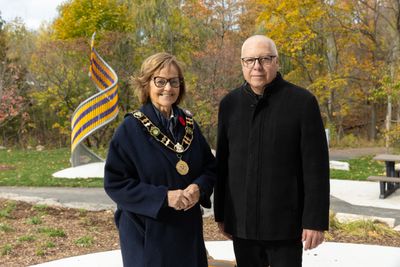

Tim Johnson, president of the Niagara Academy for Indigenous Relations, serves as an Indigenous advisor on museums, heritage, and legacy for Lord Cultural Resources, while also being the executive producer of the multiple award-winning documentary RUMBLE: The Indians Who Rocked The World. He actively participates on the boards of the Niagara Geopark, Bruce Trail Conservancy, Niagara-on-the-Lake Museum, Shaw Festival, and the Niagara Jazz Festival. Tim has played a pivotal role in developing several distinguished works, including public memorials, parks, and public artworks that honor Indigenous peoples' contributions to Canada, such as the Landscape of Nations Memorial and First Nations Peace Monument. His recent exhibition, Misko-Aki (Red Earth): Confluence of Cultures at the Muskoka Discovery Centre, garnered the 2024 Outstanding Achievement Award from the Canadian Museums Association, underscoring the importance of cultural competency in Indigenous relations. Most recently, alongside co-lead Rick Hill and their team, Tim contributed to the opening of the Woodland Cultural Centre’s Mohawk Institute: International Site of Conscience exhibition and building, which contextualizes the Treaty of Niagara and its significance on September 30, 2025. Additionally, Tim is the former associate director for Museum Programs at the Smithsonian Institution’s National Museum of the American Indian, where he directed exhibitions and public programs while publishing numerous books that advance Indigenous programming addressing art and history.

Richard Hill is a renowned educator of Indigenous cultures, histories, and arts whose visionary work has significantly advanced cultural competency and shaped Indigenous programming at several influential educational institutions. These include Deyohahá:ge: the Indigenous Knowledge Centre, the Smithsonian Institution’s National Museum of the American Indian, where he served as Assistant Director for Public Programs, the Institute of American Indian Arts Museum in Santa Fe as its Director, and the Native American Center for the Living Arts in the role of Museum Director. Additionally, he has worked with the Niagara Falls Museums as a historian and advisor and has been a master lecturer at various post-secondary institutions, including McMaster University, State University of New York at Buffalo, Six Nations Polytechnic, and First Nations Technical Institute, among others. A recipient of the Order of Canada, Rick is an accomplished artist, researcher, and writer who held the position of Indigenous Innovations Specialist at Mohawk College. He currently serves as the director of research at the First Nations Technical Institute and is the Vice President of the Niagara Academy for Indigenous Relations. As a citizen of the Tuscarora Nation of the Haudenosaunee Confederacy, Rick emphasizes the importance of understanding the Treaty of Niagara in his work while residing at the Grand River Territory.

Dr. Jennifer Brant is an Associate Professor in the Department of Curriculum, Teaching and Learning at the Ontario Institute for Studies in Education. A proud member of the Kanien’kehá:ka (Mohawk Nation), she has deep family ties to the Six Nations of the Grand River Territory and Tyendinaga Mohawk Territory. Her research focuses on Indigenous maternal pedagogies as liberatory praxis, significantly advancing cultural competency within education. In recognition of her impactful work, Dr. Brant received the 2023 Canadian Association of Curriculum Studies Outstanding Publication in Curriculum Studies Award for her article "Confronting Colonial Violences in and out the Classroom: Advancing Curricular Moves toward Justice through Indigenous Maternal Pedagogies." Her doctoral research earned the Canadian Society for the Study of Higher Education's “George L. Geis Dissertation Award” in 2018. Dr. Brant currently holds the position of faculty co-chair of the Indigenous Education Network and acts as the founding director of the Indigenous Literatures Lab. She has also made substantial contributions to Indigenous programming, with notable publications including the edited collection Rematriating Justice: Honouring the Lives of Our Indigenous Sisters (2024) and Forever Loved: Exposing the Hidden Crisis of Missing and Murdered Indigenous Women and Girls in Canada (2016), co-authored with Dr. Dawn Memee Lavell-Harvard. In her teaching, Dr. Brant imparts knowledge on Indigenous methodologies, Indigenous literatures, and the impacts of structural and colonial violence in education, all while nurturing meaningful Indigenous relations. Her pedagogical and methodological innovations in Indigenous Maternal Praxis align with the principles established in the Treaty of Niagara and have greatly enhanced the fields of education, sociology, and women and gender studies, positioning her as a key figure within the Niagara academy.

Phil Davis, a member of the Mohawk nation, has spent most of his life in St. Catharines, where he has actively contributed to his community for many decades. His cultural competency and congenial nature have allowed him to embrace numerous opportunities to educate and entertain the public about Indigenous programming while also learning about himself and others. As a musician, Phil skillfully performs traditional Haudenosaunee social dance songs and powwow songs from the Great Plains, in addition to contemporary popular music with his rock band, Ol' Child. He relishes life, particularly when sharing enlightening experiences related to Indigenous relations and the importance of the Treaty of Niagara. Currently, Phil serves on the Board of Directors for the Niagara Academy for Indigenous Relations.

Associates affiliated with the Niagara Academy for Indigenous Relations provide knowledge and experience in support of the organization’s professional development training, programming, publishing, and general engagement. They serve to ensure that factual content as well as the leading cultural and academic practices concerning Indigenous relations, are consistently applied to the work.
Dr. Alan Ojiig Corbiere, Bne doodem (Ruffed Grouse clan), is an Anishinaabe from M'Chigeeng First Nation on Manitoulin Island, Ontario. He was educated on the reserve and then obtained his BSc from the University of Toronto. He then entered York University for his MA of Environmental Studies. During his master's studies he focused on Anishinaabe narrative and Anishinaabe language revitalization. For five years he served as the executive director at the Ojibwe Cultural Foundation in M'Chigeeng, a position which also encompassed the roles of curator and historian. He also served as the Anishinaabemowin revitalization program coordinator at Lakeview School, M'Chigeeng First Nation, where he and his co-workers developed a culturally based second language program that focused on using Anishinaabe stories to teach language. In 2019 he successfully defended his PhD thesis and is currently an assistant professor in the History Department at York University. In June 2021 Dr. Alan Corbiere was appointed a Tier 2 Canada Research Chair in Indigenous History of North America.
Dr. Joshua Manitowabi has earned a BA at McMaster University, MA at McMaster University, and PhD ABD at Brock University, where he is an assistant professor of Indigenous history. His research has centered on Indigenous histories and Indigenous education. Josh’s master’s thesis, It Sometimes Speaks To Us: Decolonizing Education by Utilizing Our Elders’ Knowledge, explored the experiences and recommendations of elders in introducing Indigenous knowledge and teaching methods into the curricula of Anishinaabe schools. His doctoral dissertation, Anishinaabek Knowledge and Power on Manitoulin Island, is an ethnohistoric study of Odawa agency and perspectives regarding 18th and 19th century treaties made with the British Crown.Josh is a Potawatomi, Bear clan, member of the Wikwemikong Unceded First Nation. He is the recipient of several awards. Among them are the Joseph-Armand Bombardier Canada Award, Bluma Appel Award Scholarship, and the Harvey Longboat Major Scholarship. He is a past member of the Aboriginal Research Advisory Circle, and the President’s Advisory Committee on Human Rights, Equity, and Decolonization at Brock University. Josh’s scholarship interests are directed toward providing historical evidence for attaining equity in treaty interpretation and in economics, education, and healthcare.
Dr. Rick Monture is a member of the Mohawk nation, Turtle Clan, from Six Nations of the Grand River Territory. He is also a Professor in the Department of English & Cultural Studies and Indigenous Studies at McMaster University where he teaches classes on Haudenosaunee history and oral traditions, Indigenous literature, and American literature. He is a Community Scholar with Six Nations Polytechnic and a former member of the Steering Committee that established the Deyohahage / Indigenous Knowledge Centre, based at Six Nations. Rick is an active community volunteer and is a board member with the Grand River Post-Secondary Education Office, as well as a founding member of the Old Council House Restoration Committee that is now undertaking to restore and preserve the Six Nations Council House that was built by the Grand River Confederacy Chiefs in 1863. His book We Share our Matters: Two Centuries of Writing and Resistance at Six Nations of the Grand River, was published by the University of Manitoba Press in 2014 and is an examination of the Grand River Haudenosaunee’s assertions of sovereignty and social justice through letters, political activism, literature, and film. Rick lives at Six Nations with his family.
Dr. Kiera Kaia’tano:ron Brant-Birioukov, who was born and raised in Tyendinaga Mohawk Territory, is a recognized expert in Indigenous educational research and methodologies. She specializes in curriculum development, educational philosophy, and community engagement, with a strong emphasis on cultural competency and fostering positive Indigenous relations. Her work aligns with the principles established in the Treaty of Niagara and is instrumental in shaping Indigenous programming that promotes a deeper understanding of these vital areas, much like the initiatives encouraged by the Niagara Academy.
Karihwakeron Tim Thompson, from the Mohawk Nation at Wáhta Mohawk Territory, has held numerous roles dedicated to enhancing cultural competency and strengthening Indigenous relations. His positions include serving as the Policy Director of the Ontario Federation of Indian Friendship Centres, Education Coordinator for the Chiefs of Ontario, Education Director and Director of Languages for the Assembly of First Nations, and President and CAO of the First Nations Technical Institute, also known as the Niagara Academy. Throughout his career, he has upheld the principles outlined in the Treaty of Niagara, which underscore the significance of these vital relationships and Indigenous programming.
Gaya'dowehs Lu Ann Hill-MacDonald, a member of the Mohawk Bear Clan from Six Nations of the Grand River, has made significant strides in the realm of First Nations education at local, regional, national, and international levels. Her work particularly emphasizes cultural competency and enhancing Indigenous relations. Notably, she received an Order in Council appointment as the only Indigenous woman in Ontario chosen to support the development of the regulatory College of Early Childhood Educators, an initiative that aligns with the principles of the Treaty of Niagara and aims to bolster Indigenous programming through education.
Leah Hogan, a proud Bear Clan woman from the Oneida Nation of the Thames, serves as the Director of Indigenous Education at Niagara College, located in the One Dish, One Spoon Territory. As an emerging Haudenosaunee scholar and PhD student at OISE, University of Toronto, her research focuses on enhancing cultural competency and fostering Indigenous relations through innovative Indigenous programming, relational learning, storytelling, and land-based education. These initiatives connect deeply to themes rooted in the Treaty of Niagara and the restoration of Indigenous identity.
Nathan Tidridge has dedicated himself to promoting the role of the Crown in Canada's history, particularly its Treaty relationships, such as the Silver Covenant Chain with First Nations. Through his work, he has fostered cultural competency and enriched Indigenous programming for a new generation of students. He educates them about Treaty relationships, including the significance of the Treaty of Niagara, as well as aspects of Canadian politics, the constitutional monarchy, and civics, all of which are pivotal to understanding Indigenous relations.
Dr. Meagan Hamilton, an environmental professional and social scientist of both Mohawk and European ancestry, is dedicated to enhancing cultural competency and fostering positive Indigenous relations. Currently serving as a Special Projects Officer at the University of Toronto, she focuses on integrating Indigenous programming and education, drawing insights from historical agreements such as the Treaty of Niagara, which play a crucial role in her work at the Niagara Academy.
Dr. Daniel Coleman, honored as a Distinguished University Professor in 2023, is a professor and Canadian Research Chair in Diversity in Canadian Literary Culture at McMaster University. His teaching and research in Canadian literature examine the literary and cultural production of privilege categories such as whiteness, masculinity, and Britishness, while also engaging with the literatures of immigration and diaspora. In his work, he highlights the significance of cultural competency in improving Indigenous relations and incorporates discussions on historical contexts, including the Treaty of Niagara, to inform his approach to Indigenous programming.
Before coming to Toronto Metropolitan University in 2008, Dr. Carl Benn worked in the museum field for 34 years, where he fulfilled senior curatorial, research, and managerial duties, restored heritage properties, curated exhibits, and produced other public resources. He has published extensively, and his books include Historic Fort York (1993), the Iroquois in the War of 1812 (1998), Mohawks on the Nile (2009), Native Memoirs from the War of 1812 (2014), A Mohawk Memoir from the War of 1812 (2019), and The War of 1812 (second edition 2024). His current book projects are a history of the Royal Ontario Museum before 1948 and a study of museums in Western society.
Robyn Bourgeois (Laughing Otter Caring Woman) is a mixed-race nehiyaw iskwew (Cree woman) whose Cree family comes from Treaty Eight (Lesser Slave Lake) territory. She was born and raised in Syilx and Splats’in territories of British Columbia and is connected through her three children to the Six Nations of the Grand River. She is an Associate Professor in the Centre for Women’s and Gender Studies at Brock, where her scholarly work focuses on Indigenous feminisms, violence against Indigenous women and girls, and Indigenous women’s political activism and leadership. In addition to being an academic, Robyn is also as activist, author, and artist.
Robert I. MacDonald was on the Archaeological Services Inc. since 1982 and held the position of managing partner. He earned Honours BSc and MA degrees from Trent University and a PhD from McGill University, all in anthropology, and is accredited by the Register of Professional Archaeologists. His areas of expertise include human paleoecology, archaeological site potential modelling, geographical information system (GIS) applications in archaeology, Iroquoian archaeology, stone tool analysis, and Indigenous engagement. Since 2004, Dr. MacDonald has held appointments as an adjunct assistant professor in the Department of Anthropology at the University of Waterloo and as a research fellow of the Trent University Archaeological Research Centre. Since 2010, he has been appointed as an adjunct faculty member of the Anthropology Graduate Program at Trent University. In 2013 he was elected to the Executive Board of the Ontario Archaeological Society (OAS), a Provincial Heritage Organization, serving a two-year term as president in 2014 and 2015. Dr. MacDonald has written and produced over forty scholarly publications and presentations.
Richard D. Merritt received most of his formal education in London, Ontario where he graduated from Western University School of Medicine. Upon completing Fellowship training in Ophthalmology at the University of Toronto he moved to Niagara and practiced ophthalmology in Niagara Falls for forty years but is now contentedly retired. Richard is a past president of the Niagara Historical Society, Friends of Fort George, and the Niagara Foundation. He chaired the committee that obtained Designation of Old Town Niagara as a National Historic District, the first in Ontario. He co-chaired the Town of Niagara-on-the-Lake’s War of 1812 Bicentennial Committee and has served as guest curator for two exhibitions at the Niagara Historical Society’s Museum. He is perhaps most proud of the Landscape of Nations Memorial, the public artwork and education initiative on Queenston Heights that recognizes the significant sacrifices and critical contributions of Six Nations and Native Allies during the War of 1812. His publications include The Capital Years: Niagara-on-the-Lake 1792–1796, of which he was a contributing Editor, and On Common Ground: The Ongoing Story of The Commons in Niagara-on-the Lake, among others.
Dr. Ron Williamson is an archaeologist with over fifty years of field and research experience. In 1980, he founded Archaeological Services Inc., which has become the largest cultural heritage consulting firm in Canada. He has administered and directed hundreds of archaeological assessments, excavations and heritage planning studies, and he was the Director of the multi-year Master Plan of Archaeological Resources for the City of Toronto. He is also a former Adjunct Professor at the University of Toronto and Western University. He has published extensively on the Indigenous and colonial history of northeastern North America. He is immediate Past President of the Museum of Ontario Archaeology at Western University, and former Vice-President of the Shared Path Consultation Initiative. He served on the board of Heritage Toronto from 2001 to 2007. In 2016, he was conferred the Smith-Wintemberg award, the Canadian Archaeological Association’s most prestigious award for outstanding contributions to Canadian Archaeology, and in 2019, he was given Heritage Toronto’s Lifetime Achievement Award. In 2024, he was given the Lieutenant Governor of Ontario/OHT, Thomas Symons Award for Commitment to Conservation.
Travis Hill, proud citizen of the Haudenosaunee Confederacy: Tuscarora Nation, Beaver Clan. Since 2023, Travis has been the Curator of Indigenous Culture & Heritage with the City of Hamilton. In this role, he balances his time between the Heritage Resource Management (Civic Museums) and the Indigenous Relations Team, both of which work on the implementation of Hamilton’s Urban Indigenous Strategy involving the Calls to Action within the Truth and Reconciliation Report and Civic Museums Implementation Strategy. Previously, Travis was with the Niagara Parks Commission in Niagara since 2001, leaving as the Site Manager at Old Fort Erie National Historic Site, a War of 1812 National Historic Site. He continues to be involved with incorporating Indigenous culture and history into events within the municipality of Hamilton and Niagara Region. Travis also played professional lacrosse in the National Lacrosse League (2005-2012); he played six years with the Minnesota Swarm (now Georgia Swarm)culminating in an NLL Champions Cup with the Rochester Knighthawks in 2012. He was also aplayer with the Haudenosaunee Nationals (formerly Iroquois Nationals) World Lacrosse team in both Box and Field lacrosse.
David Beyer is a Toronto-based, multi-disciplinary designer, artist, illustrator, and creative director. As a member of the Fisher River Cree Nation (ocêko-sîpiy), a Treaty 5 community in Manitoba’s interlake region, David emphasizes cultural competency in his work. He has collaborated with both Indigenous and non-Indigenous companies and institutions across North America, fostering meaningful Indigenous relations while promoting the values established in the Treaty of Niagara.
Julia Murray is an educator, school leader, and educational consultant with more than two decades of experience in teaching, curriculum development, and leadership. She currently serves as Head of School at Royal Oak Community School in Niagara-on-the-Lake, where she champions inquiry-based, community-connected, and place-responsive learning. Julia holds degrees in Biology, Psychology, Child Study and Education, and Early Childhood Education, and has taught and mentored educators through her work with the Dr. Eric Jackman Institute of Child Study at the University of Toronto, Brock University, and OISE. As an Indigenous education consultant with the Landscape of Nations 360° initiative, she has worked alongside Indigenous partners to help educators and communities deepen their understanding of Indigenous histories, perspectives, and relationships to land. Julia is passionate about helping children develop meaningful connections to place, culture, heritage, and community, believing that these foundations nurture curiosity, empathy, and the open-hearted learning necessary to engage thoughtfully with Indigenous histories, contributions, and ways of knowing. Julia is an Associate with the Niagara Academy for Indigenous Relations.
The Niagara Academy for Indigenous Relations would offer immersive professional-development retreats that ground participants in tangible teachings from the Treaty of Niagara (1764) and the deep Indigenous history of the region, beginning with land-based learning at key sites where wampum diplomacy, nation-to-nation commitments, and the Covenant Chain principles of peace, friendship, and mutual respect were affirmed; from this foundation, retreats would weave together workshops on relational leadership, trauma-informed community engagement, ethical decision-making, cross-cultural communication, and Indigenous governance frameworks, all guided by Elders, knowledge keepers, and regional historians. Participants from across Canada would engage in experiential activities such as collaborative wampum-belt interpretation, restorative-circle practice, and hands-on cultural arts, while also developing practical skills for implementing reconciliation-aligned policies and fostering respectful partnerships within their workplaces and communities.
Neutral Nation legacy site, Shoʼaríshon Park. (photo by Alex Heidbuechel)


The Niagara Academy for Indigenous Relations offers rich place-based learning experiences that take participants through Indigenous legacy spaces, parks, memorials, public artworks, and nature trails to illuminate the region’s deep cultural and historical landscape; guided by knowledge keepers, historians, and cultural interpreters, these tours explore the significance of wampum diplomacy at riverside gathering sites, the stories embedded in public artworks and commemorative installations, the teachings connected to Indigenous stewardship of local ecosystems, and the enduring presence of Haudenosaunee and Anishinaabek nations across the Niagara corridor. Through walking tours, storytelling sessions, land-based activities, and reflective practices in natural settings, participants from across Canada will gain a deeper understanding of place, relationality, and the living histories that continue to shape Indigenous–Crown relations today.

The Landscape of Nations 360° Indigenous Education Initiative was built upon a process established and directed by Tim Johnson at the Smithsonian Institution’s National Museum of the American Indian, beginning in 2005. Working with a team of professional museum and Indigenous educators, emerged the Framework for Ten Essential Understandings concept that has been applied to the Niagara Region.

The Framework for Essential Understandings About Indigenous Peoples of the Niagara Region is a direct outcome of that strategy. The principal scholars and intellects who crafted and shaped its content are Associates with the Niagara Academy for Indigenous Relations. They continue to apply the themes and key concepts of this initiative across all of the Academy’s educational engagements.

The Indigenous Niagara Outstanding Achievement Awards honor and celebrate influential leaders who positively impact the Indigenous Niagara community on both sides of the Niagara River and throughout the Niagara Escarpment. These awards align with the principles of cultural competency and reflect the highest standards of Indigenous excellence across six categories: Performing Arts, Visual Arts, Intellectual Advancement, Language and Culture, Empathic Traditions, and Two-Row Alliance—supporting Indigenous peoples. The Outstanding Achievement Awards have become an esteemed honor, showcasing the quality and quantity of exceptional Indigenous individuals and allies who are advancing Indigenous relations in the region, in accordance with the principles established by the Treaty of Niagara. Additionally, these awards contribute to the broader goals of Indigenous programming and the engagement of the Niagara Academy in promoting cultural awareness.

The Battle of Queenston Heights on October 13, 1812, embodies a significant expression of historic alliances with deep roots and represents a crucial moment in the emergence of a fledgling country, as its borders and character were being tested and defined. Acknowledging the contributions and sacrifices made by the Six Nations and Native Allies, whose cultural competency was essential in supporting their British and Canadian counterparts, we honor their efforts in securing victory at key events like Queenston Heights and throughout the War of 1812. In recognition of these invaluable relationships, particularly those fostered by the spirit of the Treaty of Niagara, we continue to hold the annual service, Valour & Victory: Honouring Indigenous Veterans. This event highlights Indigenous programming that showcases both the strength of those who fought for our freedom and the importance of enhancing Indigenous relations.
The Niagara Academy for Indigenous Relations will offer seminars and symposia centered on strengthening understanding, collaboration, and cultural competency between Indigenous and non-Indigenous communities, featuring sessions led by Indigenous knowledge holders, scholars, and community leaders on topics such as treaty history, rights and governance, culturally informed conflict resolution, language revitalization, ethical research and consultation practices, and land-based education; these events would blend academic scholarship with lived experience, emphasizing relationship-building, reciprocity, and practical tools for organizations, governments, and individuals seeking to engage respectfully and effectively with Indigenous nations.
The Niagara Academy for Indigenous Relations will produce publishing that reflects the high-calibre, culturally grounded, and visually compelling standards exemplified by Landscape of Nations: Beyond the Mist and the many influential works directed, edited, and written by board members Rick Hill and Tim Johnson. Their publishing program would focus on books, catalogues, and digital resources that illuminate Indigenous history, diplomacy, and contemporary cultural resurgence through narrative scholarship, community voices, archival research, and powerful visual storytelling. These works would highlight the significance of regional events such as the Treaty of Niagara, celebrate the resilience and creativity of Haudenosaunee and Anishinaabe nations, and document major public artworks, commemorative landscapes, and cultural initiatives. With an emphasis on accessible, authoritative, and beautifully produced publications, the Academy would seek to educate a broad readership while honouring Indigenous knowledge systems and strengthening public understanding of Indigenous–Crown relations.
The Niagara Academy for Indigenous Relations offers advisement services that support governments, organizations, educators, and businesses in building respectful, culturally informed, and effective relationships with Indigenous peoples, grounded in the region’s deep and historic diplomatic traditions. These services include guidance on Indigenous engagement protocols, reconciliation-aligned policy development, curriculum design, cultural competency strategies, the ethical use of Indigenous imagery and narratives, and best practices for consultation and collaboration with Indigenous peoples.
Feel free to reach out as we work together on these essential initiatives.
P.O. Box 187, 1979 Fourth Line Road, Ohsweken, ON N0A 1M0
Heritage District, Niagara-on-the-Lake
Open today | 09:00 a.m. – 05:00 p.m. |
We use cookies to analyze website traffic and optimize your website experience. By accepting our use of cookies, your data will be aggregated with all other user data.